What Is a Stock, Actually? How Owning One Really Works
I’ve written about index funds, individual stocks, dollar-cost averaging, and a dozen other things on here without ever stopping to explain the actual base unit underneath all of it: what a share of stock is, and what you legally get when you own one. Worth fixing.
The one-sentence version
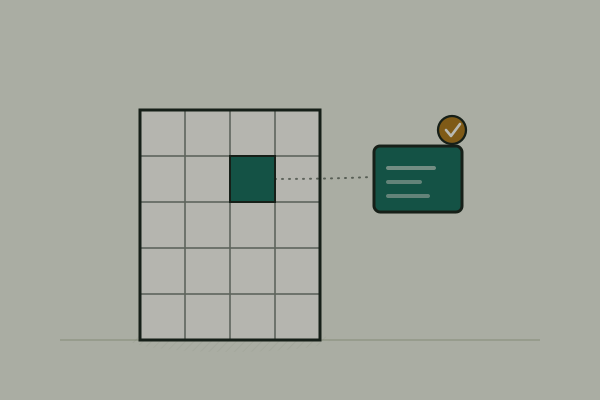
A share of stock is a unit of ownership in a company — buy one share of a company with a million shares outstanding, and you own one-millionth of that company, with the rights that come with it.
What owning a share actually entitles you to
This is the part that surprises people, because it’s more real than it sounds:
- A claim on the company’s profits, if and when the company distributes them as dividends. Not every company pays dividends — many reinvest profits into growing the business instead — but when a company does pay one, it’s paid per share, to every shareholder.
- A vote. Shareholders typically get to vote on major company decisions — electing the board of directors, approving mergers, and other major moves — proportional to how many shares they own. One share in a company with a billion shares outstanding is a tiny vote, but it’s a real one, not a metaphor.
- A claim on assets if the company is liquidated, after everyone else in line gets paid first — creditors and bondholders are ahead of shareholders here, which is part of why stock is riskier than a bond issued by the same company.
- The right to sell it to someone else, whenever you want, at whatever price a buyer is willing to pay — which is what’s actually happening every time a stock’s price moves on an exchange.
What you don’t get: any say in day-to-day operations, a guaranteed return, or your money back if the company simply performs badly. Ownership, not a loan, not a promise.
Where the price actually comes from
A stock’s price isn’t set by the company — it’s set by whatever the last two people agreed to trade at, continuously, all day. If more people want to buy than sell at a given price, the price ticks up; more sellers than buyers, it ticks down. That’s genuinely the whole mechanism: not a company-set number, not a government-set number, just a continuously updating agreement between whoever’s currently trying to buy and sell.
This is also why a stock’s price and a company’s actual health can diverge, sometimes for a long time — price reflects collective expectations about the future (earnings, growth, competition, the broader economy), which can be wrong, overly optimistic, or overly pessimistic for stretches of time before it corrects.
Why a company sells stock in the first place
Companies issue stock to raise money without taking on debt — instead of borrowing and owing interest, a company sells partial ownership to investors in exchange for cash it can use to grow. That’s the original transaction (an “IPO,” initial public offering); after that, when you buy a share on an exchange, you’re almost always buying it from another investor, not from the company itself — the company already got its money when the share was first issued.
Common vs. preferred stock, briefly
Most of what gets talked about as “stock” is common stock — voting rights, dividends if declared, last in line if the company liquidates. Preferred stock exists too: generally no voting rights, but a fixed dividend that gets paid before common shareholders see anything, and higher priority than common stock (though still behind debt) if the company liquidates. Preferred stock behaves more like a hybrid between a stock and a bond. Unless you’re deliberately seeking it out, the stock in a typical brokerage account or index fund is common stock.
The takeaway
A share of stock isn’t an abstract number on an app — it’s a small, real, legal claim on a specific company: its profits if it pays them, a vote on its major decisions, and a slice of what’s left if it’s sold off. The price moving up and down on your phone is just the ongoing, live negotiation over what that claim is worth to somebody else right now.
Discussion