What Is Inflation, Actually? Why a 7% Return Isn't Really 7%
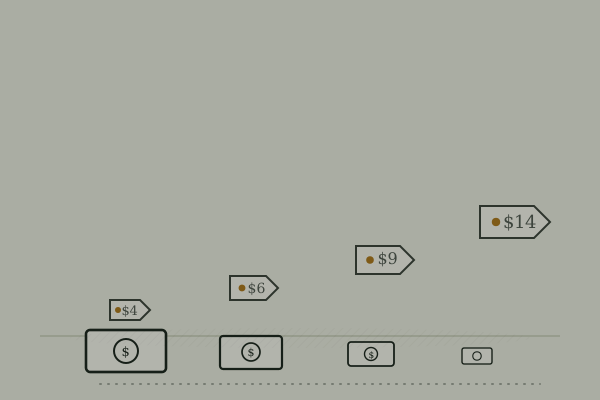
I mentioned in an earlier post that money sitting in a savings account “loses real purchasing power” to inflation without ever explaining the actual mechanism — and I’ve talked about 7% average returns in several posts since without mentioning that 7% isn’t really 7%, once inflation is in the picture. Both of those deserve the real math.
The one-sentence version
Inflation is prices rising over time, which means the same amount of money buys less in the future than it does today — and it applies to every dollar you hold, whether it’s sitting in cash, in a savings account, or growing inside an investment.
What $100 actually buys later
Here’s $100 today, and what it’s actually worth — in terms of what it can buy — after 20 years at a few different average inflation rates:
| Inflation rate | $100 today is worth (in today’s purchasing power) after 20 years |
|---|---|
| 2% | ~$67 |
| 3% | ~$55 |
| 5% | ~$38 |
Nothing happened to the number “$100” if it just sat in cash — it’s still $100. What changed is what that $100 can actually buy, because prices for everything else kept climbing while that pile of cash stayed flat. That’s the entire mechanism: inflation doesn’t take money away from you directly, it just makes the same money worth less against everything you’d spend it on.
Why this matters even more for investment returns
This is the part that surprises people: inflation doesn’t just erode cash sitting still — it eats into investment growth too, because the return you actually experience in real life is the “real” return (after inflation), not the “nominal” return (the raw percentage you see quoted).
Say your investments return 7% nominal in a year where inflation runs at 3%. Your real return — what you actually gained in purchasing power — is close to 4%, not 7%. That 3-percentage-point gap is inflation quietly taking its share before you ever see it as a number on a statement, since your account balance never shows a separate line for “inflation deducted here.”
This compounds the same way fees do. $10,000 growing at a 7% nominal return for 30 years becomes about $76,123 on your account statement. But in terms of what that money can actually buy at 3% average annual inflation over those 30 years, it’s really worth closer to $31,361 in today’s dollars. The statement number and the real number diverge more every year, because inflation compounds against your purchasing power the exact same way growth compounds for your balance.
Why “the stock market returns 7-10%” already has a footnote
When people cite long-run stock market returns (often quoted around 7-10% annually), that figure is sometimes nominal and sometimes already adjusted for inflation (“real”), depending on the source — and mixing the two up is an easy way to overestimate how much richer you’ll actually be. This is worth checking whenever you see a headline return number: is this before or after inflation? A 10% nominal return in a high-inflation decade can mean less real growth than a 7% nominal return in a low-inflation one.
Why this is still an argument for investing, not against it
None of this is a reason to avoid investing — it’s the opposite. Cash and typical savings accounts have no growth mechanism to fight inflation with at all; a stock or bond portfolio at least has a real (positive, historically) return after inflation, most of the time, over long periods. The problem inflation creates isn’t “don’t invest,” it’s “don’t mistake the nominal number on your statement for your actual growth in buying power” — and definitely don’t leave a large cash balance sitting still for years while telling yourself it’s the safe choice, since inflation is working against it the entire time, just invisibly.
The takeaway
Every return you see quoted — a savings account’s interest rate, a fund’s average annual return, your 401(k) balance’s growth — is a nominal number until you subtract inflation from it. The gap between nominal and real is usually a few percentage points a year, which sounds small and compounds into a very large difference over decades, the same mechanism that makes an expense ratio matter more than it looks like it should. Ask “is that before or after inflation” the next time a return number sounds impressive — it’s the honest version of the same question.
Discussion