High-Yield Savings Accounts: What Your Big Bank's 0.01% Is Actually Costing You
I’ve complained about low-interest savings accounts in both the saving vs. investing post and the inflation post without ever actually telling you what to do about it. There’s a specific, concrete fix, and it costs nothing and takes about ten minutes.
The one-sentence version
A high-yield savings account is the same FDIC-insured product as your checking account’s attached savings account, just from a bank (usually online-only) that pays a meaningfully higher interest rate — often 40-100x what a traditional big-bank savings account pays, for identical safety.
The actual gap, in dollars
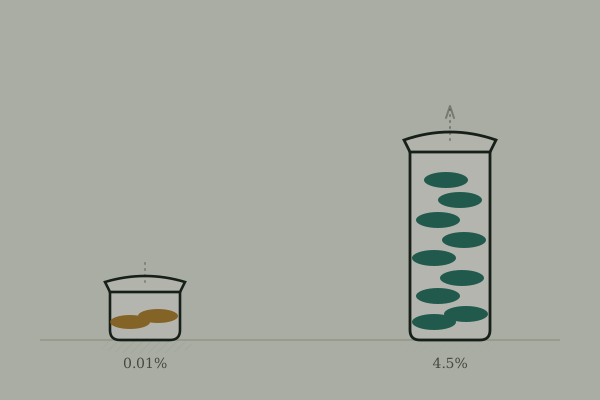
Big banks have historically paid savings rates as low as 0.01%, while competitive high-yield savings accounts (HYSAs) have paid rates in the 4-5% range in recent years — rates move with the broader interest-rate environment, so the exact number changes, but the gap between big-bank and high-yield has stayed wide and persistent. Here’s $10,000 sitting in each, no additional deposits:
| 0.01% (typical big bank) | 4.5% (a representative HYSA rate) | |
|---|---|---|
| After 1 year | $10,001 | $10,450 |
| After 5 years | $10,005 | $12,462 |
That’s $2,457 more over five years, on the same $10,000, doing nothing differently except where the money sits. Not a return from risk, not a reward for picking a good investment — just a difference in which account holds money that was sitting in cash either way.
Why this isn’t “too good to be true”
The obvious question: if it’s the same safety, why would any bank pay more? Online-only banks running a high-yield account don’t operate physical branches, so they have dramatically lower overhead than a traditional bank with thousands of locations — and they pass some of that savings on as a higher rate to attract deposits, instead of spending it on branch real estate. Both are typically FDIC-insured up to $250,000 per depositor, per bank — the same federal protection a traditional bank savings account has. The product isn’t riskier; the issuer’s cost structure is just different.
What a high-yield savings account is for (and isn’t)
This is specifically the right tool for money that needs to stay liquid and safe — exactly the emergency fund money, a short-term savings goal, or any cash you might need within the next few years. It is not a substitute for investing money you won’t need for a decade or more; even a good HYSA rate trails long-run stock market returns by a wide margin over long periods, which is the entire subject of the saving vs. investing post. The question a HYSA answers is narrower and still important: “given that this money needs to stay in cash, which cash account should hold it?”
What to actually check before opening one
- The APY (annual percentage yield) is the number that matters — compare it directly across banks, and expect it to drift over time as broader interest rates change; a rate that looked great two years ago can be mediocre today.
- FDIC insurance — confirm the bank is actually FDIC-insured (or NCUA-insured for a credit union) before depositing anything. This should be stated plainly on the account page; if it isn’t obvious, that’s a red flag, not a detail to skip.
- No or low minimum balance and no monthly fee — most competitive HYSAs have neither; one that charges a maintenance fee or requires a high minimum balance is working against the rate advantage it’s offering.
- How fast you can move money out — HYSAs are liquid, but transfers to and from a linked checking account typically take 1-3 business days, unlike instant access at a physical branch. Fine for an emergency fund, worth knowing before you need money same-day.
The actual action item
Check your current savings account’s interest rate — it’s usually on your statement or account summary. If it’s a fraction of a percent and you have more than a trivial amount sitting in it, moving that cash to a high-yield savings account is one of the few genuinely free upgrades available in personal finance: no new risk, no new behavior required, just a better rate on money that was already sitting still.
The takeaway
This isn’t a strategy, it’s a logistics fix: the same safe, liquid cash, held at a bank actually willing to pay a competitive rate for it instead of a token one. It won’t make you rich, but on money that’s supposed to be sitting in cash anyway — the exact money I’ve been telling you not to invest — there’s no real reason to leave it earning next to nothing.
Discussion